32-count phrasing: find the 1, cue on time
Classes feel tight when every change lands on the top of a phrase. That is a skill, not a gift: find the downbeat, count in 8s, hear where the 32 turns over, and call the change four counts early. Here is the whole method, and where tempo fits into it.
Updated 25 September 2026

The hierarchy
Music is built in nested units, and group fitness uses two of them: the 8-count for moves and the 32-count phrase for changes. Everything else follows.
| Unit | Length | What it is for |
|---|---|---|
| Beat | 1 | The steady pulse. The kick drum in most gym and dance music. |
| Bar (measure) | 4 beats | Count 1-2-3-4. Almost all fitness music is in 4/4. |
| 8-count | 2 bars | The instructor's unit: 1-2-3-4-5-6-7-8. Most moves are built on one or two. |
| 32-count phrase | 4 × 8 = 32 beats | Where songs change: verse to chorus, build to drop. Changes land on its 1. |
| Section | 1–4 phrases | Intro, verse, pre-chorus, chorus, bridge, outro. |
1. Find the 1
The downbeat is the heaviest beat of the bar, and the heaviest of all is the first beat of a phrase. Producers mark it for you: a drum fill, a riser, a cymbal crash or a vocal entry almost always lands on it. When a build stops and the kick comes back, that kick is 1.
If you are not sure, count along from a guess and see whether the song's changes keep landing on your 1. If they land on your 5, you started half a phrase late. Shift and retry.
2. Count in 8s, feel the 32
Count continuously, 1 to 8, out loud when you practise and silently in class. Every fourth 8 ends a phrase. You will start to hear the turnover before you count it: the melody resolves, a fill runs, the energy lifts. That instinct is the goal; the counting is the scaffold.
3. Know how long a phrase is
Tempo sets the clock. At 128 BPM a 32-count phrase is fifteen seconds, which is why so many sprint and interval blocks land on multiples of fifteen. The faster the track, the less time you have between cue and change.
| Tempo | One 8-count | One 32-count phrase |
|---|---|---|
| 120 BPM | 4.0 s | 16 s |
| 128 BPM | 3.75 s | 15 s |
| 132 BPM | 3.6 s | 14.5 s |
| 140 BPM | 3.4 s | 13.7 s |
| 150 BPM | 3.2 s | 12.8 s |
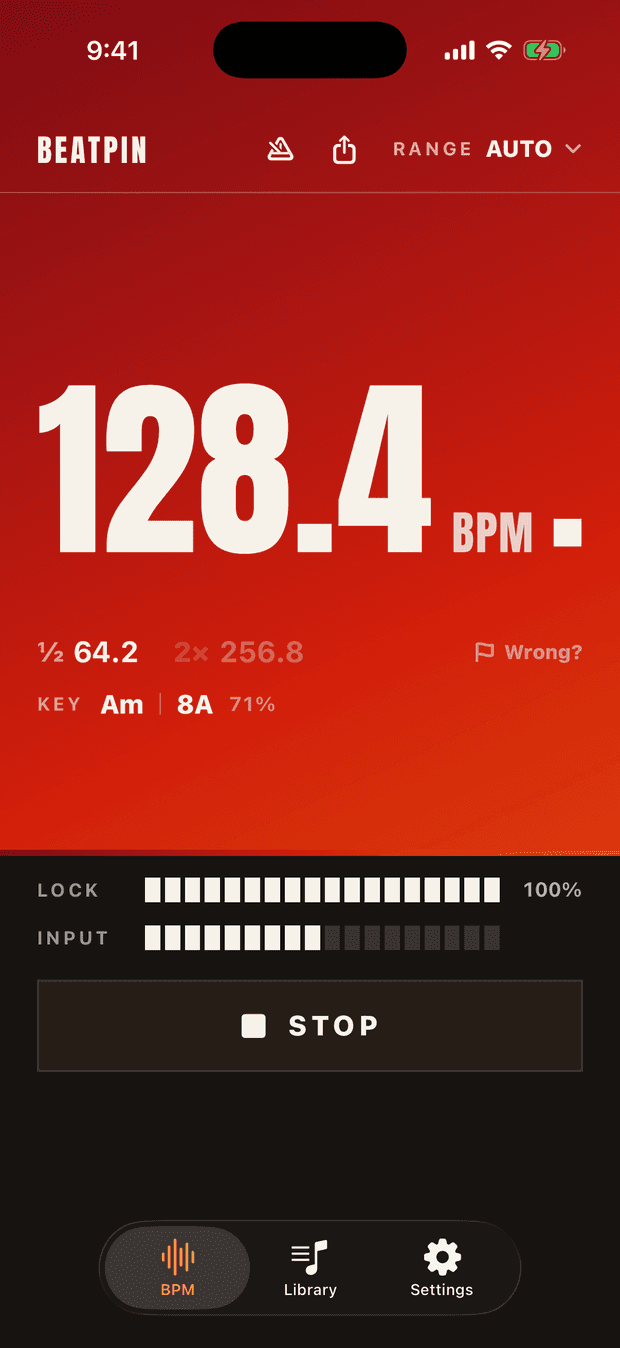
That table only works if the tempo is right. A 128 track read as 64 gives you a thirty-second “phrase” that the song does not have. This is where a live read helps: Beatpin locks the tempo and shows the half and double beside it, so you know which clock the room is on. The RPM to BPM chart covers the same octave question for cycling cadence.
4. Where songs break the pattern
- Tags and bridges. Pop edits often add a 16-count tag or a 4-count pickup. Map the song once and note where the extra counts are.
- Half-time drops. Some drops halve the feel without changing the tempo. Keep counting the original 8s; the phrase length does not change.
- Latin rhythms. Salsa and cumbia carry fast percussion that reads at double tempo. Count the half-time pulse; the dance-fitness sheet marks which blocks this affects.
- Intros without a kick. Start counting at the first clear downbeat, not at the start of the file.
A ten-minute practice routine
- Pick one track you teach. Play it on a speaker and read its tempo, so you know the phrase length.
- Count 1-8 out loud from the first downbeat. Tap your thigh on every 1.
- Say “change” on every 32. Check whether the song changes with you.
- Now say the cue on 5-6-7-8 of each fourth 8. That is your class timing.
- Repeat with a track at a different tempo from your sheet. Faster tracks shrink the window; practise those most.
With the beat marker on, Beatpin flashes on every beat at the locked tempo, which gives you something to count against until your ear takes over. Turn it off in Settings when you no longer need it.
See the beat while you learn to hear it.
Beatpin's beat marker flashes on every beat at the locked tempo, which is a visual count to practise against. Free, no ads, no account.